

Quick answer
Tokaji Aszú Eszencia is the rarest and most prized expression, produced only in exceptional vintages from free-run juice of botrytized grapes, with sugar levels exceeding 450 grams per liter. For most collectors and connoisseurs, Tokaji Aszú 6 Puttonyos represents the pinnacle of balance—intense sweetness, layered complexity, and decades of aging potential. Lower puttonyos levels (3, 4, 5) offer lighter styles, while late harvest Szamorodni provides a drier alternative.
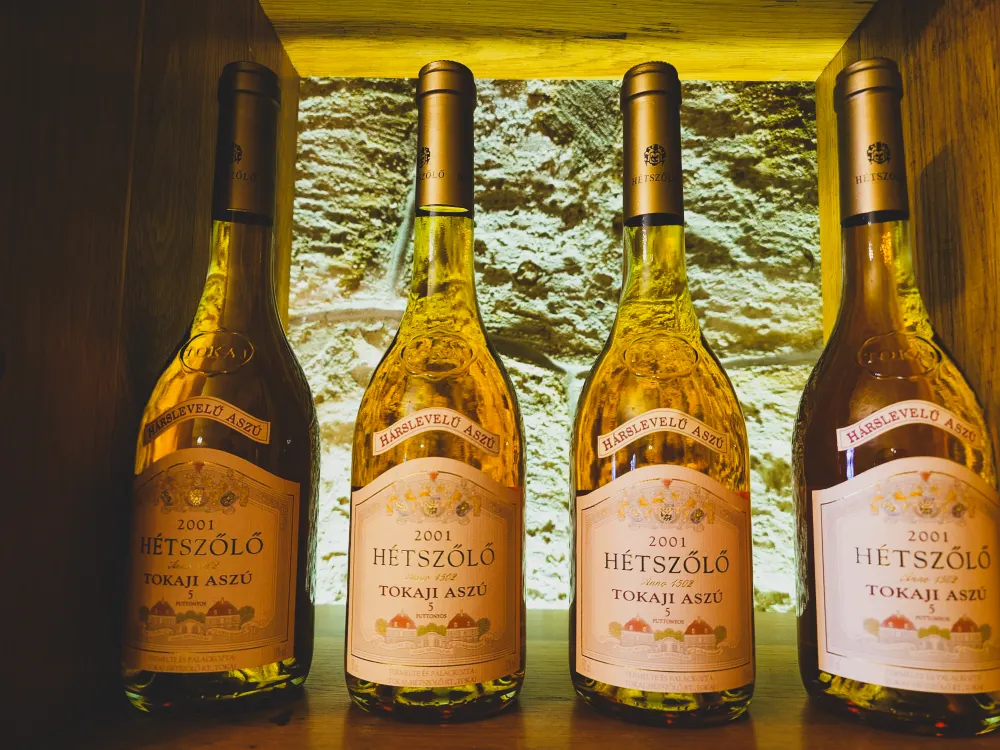
A single bottle of Tokaji Aszú Eszencia can take more than a decade to ferment. The juice is so saturated with sugar that yeast struggles to convert it into alcohol, yielding a liquid closer to nectar than wine, with alcohol levels often below five percent. Production volumes are minuscule—some estates release fewer than a hundred bottles per vintage, and only when autumn conditions align perfectly to produce fully shriveled, botrytis-covered berries. The puttonyos system, though officially retired in 2013 in favor of minimum residual sugar thresholds, remains the framework most visitors use to understand Tokaji Aszú quality. Six puttonyos historically signified six hods of Aszú berries added to a 136-liter Gönc barrel of base wine, resulting in residual sugar above 150 grams per liter. These wines balance honeyed apricot, candied orange peel, and saffron with enough acidity to prevent cloying sweetness. They age for decades, developing toffee and tobacco notes in bottle. Three, four, and five puttonyos versions offer progressively lighter styles, suitable for pairing with foie gras or blue cheese rather than contemplative sipping. Szamorodni, meaning "as it comes," is made from vineyard parcels where botrytized and healthy grapes are harvested together without sorting. Édes (sweet) Szamorodni resembles a lighter Aszú, while száraz (dry) Szamorodni develops under flor yeast, gaining oxidative, nutty characteristics similar to fino sherry. Late harvest wines, labeled késői szüretelésű, are produced from ripe but unaffected grapes, offering fruit-forward sweetness without the botrytis signature. What is the best tokaji wine for your visit depends on your tasting goals. Eszencia appears on cellar tour menus as a rare capstone, often offered in thimble portions due to its price and scarcity. Six puttonyos Aszú provides the most complete expression of the region's terroir and winemaking tradition. Visitors seeking variety should request a vertical tasting of a single producer's Aszú wines across multiple vintages, revealing how the volcanic soils of Tokaj-Hegyalja and varying botrytis pressure shape each year's character. The Tokaj Museum at Serház utca 1 offers context on the region's 400-year Aszú heritage before you descend into the tunneled cellars where these wines mature in darkness and constant humidity.
“A single bottle of Tokaji Aszú Eszencia can take more than a decade to ferment.”
Dry Furmint vs. Aszú: Determining What Is The Best Tokaji Wine For Your Palate
Selecting the best Tokaji wine depends on whether you prefer the sharp, structural clarity of dry Furmint or the concentrated, honeyed complexity of botrytized Aszú. Understanding these two distinct styles helps you match your selection to your personal taste and dining context.
| Dry Furmint Mineral Focus |
Top pick Aszú Sweet Complexity |
|
|---|---|---|
| Flavor Profile | Crisp, high-acidity, smoky, green apple | Honey, apricot, orange peel, dried fruit |
| Sugar Content | Below 5 grams per liter | 120 to over 450 grams per liter |
| Best Food Pairing | Grilled fish, roasted poultry, goat cheese | Foie gras, blue cheese, fruit-based desserts |
| Aging Potential | 3 to 10 years | 20 to 50+ years |
| Typical Occasion | Aperitif or main course dining | Special events or dessert course |
Verdict: Choose dry Furmint if you prioritize a versatile, food-friendly table wine, or opt for Aszú if you seek a historic, world-renowned dessert experience.
Technical Standards of What Is The Best Tokaji Wine
Understanding the quality of Tokaji wines requires knowledge of specific production standards and the primary grape varieties used. These technical criteria dictate the character and classification of the region's most renowned sweet and dry wines.
6 Puttonyos requirement
The Puttonyos system historically indicated the sweetness level of Aszú wine, with 6 puttonyos representing a high concentration of noble rot grapes added to the base wine. Current regulations mandate that all Aszú wines must meet the sweetness equivalent of at least 5 puttonyos, defined by a minimum of 120 grams per liter of residual sugar.
Furmint grape dominance
Furmint is the primary grape variety used in Tokaj, known for its high acidity and ability to accumulate sugar and botrytis. It serves as the structural backbone for both the intense sweet Aszú wines and the increasingly prominent dry Tokaji expressions.
Aszú berry selection
The production of Aszú wine involves the labor-intensive process of hand-picking shriveled, botrytized berries. These berries are macerated in fermenting must or wine to extract complex flavors and sugars.
Botrytis cinerea role
Botrytis cinerea, also known as noble rot, is a fungus that dehydrates grapes and concentrates sugars, acids, and flavors. This specific climatic condition is essential for the development of the distinct profile found in sweet Tokaji wines.
Essencia rarity
Essencia is the rarest form of Tokaji, made exclusively from the free-run juice of highly concentrated Aszú berries. Because of its extreme sugar content, fermentation is incredibly slow and often results in a wine with very low alcohol levels.
Dry Tokaji evolution
While sweet wines define the region's heritage, modern standards prioritize dry Furmint and Hárslevelű varietals. These wines highlight the distinct volcanic terroir of the Tokaj region by focusing on mineral profiles rather than residual sugar.
Opening Hours for Exploring the History of What Is The Best Tokaji Wine
The Tokaj Museum is open daily to provide context on the history of regional winemaking. Visitors may access the facility during the scheduled hours listed below.
| Monday | 10:00–17:00 | |
|---|---|---|
| Tuesday | 10:00–17:00 | |
| Wednesday | 10:00–17:00 | |
| Thursday | 10:00–17:00 | |
| Friday | 10:00–17:00 | |
| Saturday | 10:00–17:00 | |
| Sunday | 10:00–17:00 |
Best Time of Day and Season for Finding What Is The Best Tokaji Wine
The best time to visit the Tokaj Wine Region is during the autumn harvest, specifically between September and October, to observe the production of Aszú grapes. For daily logistics, adhering to the best arrival window of 10:00–16:00 ensures access to cellar tours and local experts who can guide your selection.
September–October
Moderate to highMild, 15°C–22°C
Harvest activities are in full swing and the landscape is vibrant.
May–June
Low to moderateWarm, 18°C–25°C
Vineyards are lush and green, providing ideal conditions for pre-summer exploration.
Weekday mornings
Minimal—
Visiting between 10:00 and 12:00 allows for quiet, personalized tastings and direct access to winemakers.
Verdict: For the most comprehensive experience, plan your visit for Tuesday to Thursday during October, arriving at 10:00 to maximize cellar access.
Check availability
Common Questions About Choosing Tokaji Wines
Everything you need to know about what is the best tokaji wine